|
|
|
China
Information and Sources:
Chinese Government Related Information
Note:
This is an
UNOFFICIAL site providing information regarding the Chinese Government
and related topics. All the information
published in this page is collected from both official and
unofficial sources. All the content in this page is for your informational purpose only.
|
|
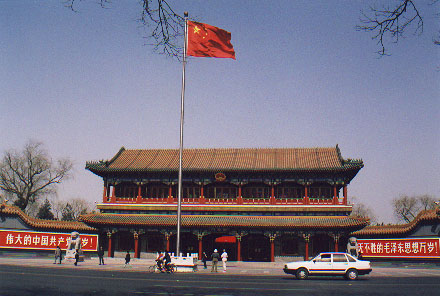
South
Gate of
Zhongnanhai - Headquarters of Chinese
Government
Note:
Wall Banner on the left-hand side: "Long Live the Great Chinese
Communist Party!"
Wall Banner on the right-hand side: "Long Live the Invincible Mao
Zedong Thought!"
|
|
|
Top Government
Officials |
|
2013-3 |
|
|
|
|
List of Cabinet Level Agencies and
Ministers
|
|
Special Organization directly under the State Council
Organizations directly under the State Council
Administrative Offices under the State Council
Institutions Directly under the State Council
Administrations and Bureaus under the Ministries & Commissions
|
|
|
Special Administrative Regions (Hong Kong and Macao) |
|
|
|
|
Government Related Links |
- President of People's
Republic of China
The President and
Vice-President of the People's Republic of China are elected by the
National Peolpe's Congress. Their term of office is five years.
The President, in pursuance of the
decisions of the National Peoples's Congress and its Standing Committee,
promulgates statutes, appoints or removes the Premier and other members of
the State Council, confers state medals and titles of honor, issues orders
of special pardons, proclaims martial law, proclaims a state of war,
issues mobilization orders, receives foreign diplomatic representatives on
behalf of the People's Republic of China, appoints or recalls
plenipotentiary representatives abroad, and ratifies or abrogates treaties
and important agreements concluded with foreign states.
The Vice-President assists in the work of
the President and may perform the functions and exercise that powers of
the President as may be deputed by the President. In case the office of
the President falls vacant, the Vice-President will succeed to the office
of the President.
The current president is
Hu Jintao
- The State Council and
Local Governments
The State Council of the
People's Republic of China, that is, the Central People's Government, is
the highest state administrative organ. It enforces that laws and
decisions formulated and approved by the National People's Congress and it
s Standing Committee, to which it is responsible and accountable. Within
the limits of its power and functions, it has the power to adopt necessary
administrative measures and regulations, and issue orders.
The Premier takes overall responsibility
for and directs the work of the State Council. He calls and presides over
executive and plenary meetings of the State Council. Members of the
executive meetings are the Premier, Vice-Premiers, State Councilors and
the Secretary-General. Plenary meetings are attended by the Premier,
Vice-Premiers, State Councilors, the Secretary-General, ministers in
charge of ministries and commissions and the Auditor-General. Decisions on
major issues concerning the work of the State Council must be discussed
and approved either at the executive meetings or the plenary meetings of
the State Council.
The State Council exercises unified
leadership over the work of the ministries and commissions and the local
governments at different levels. It directs and administers affairs of
economy, finance, banking, commerce, education, science, culture, public
health, physical culture, family planning, public security, urban and rural
development, judicial administration and supervision. In addition it is
responsible for the strengthening of national defense, and conducts
foreign and civil affairs as well as affairs concerning the nationalities
and overseas Chinese.
- Chinese Local
Government:
Beijing
City Government
- For other related pages
regarding China state organs in this web site, please click HERE
|
|
|
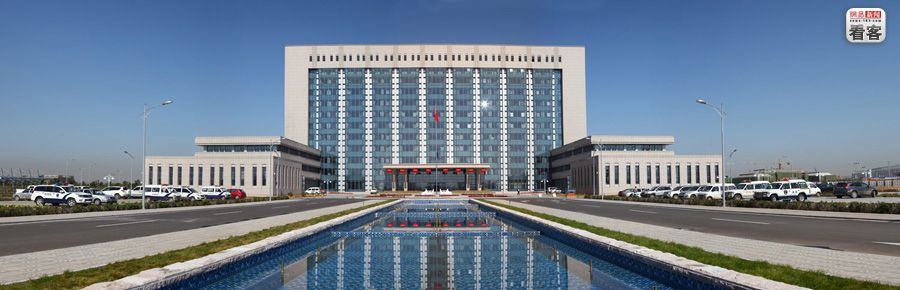
Pictures:
Luxury Chinese Local Government Office Buildings
Question: if local government is out of control in spending tax payers'
money? |
|
|
|
|
|
White Papers on Important Issues |
|
2006 |
|
|
|
2005 |
|
|
|
2004 |
|
|
|
2003 |
|
|
|
2002 |
|
|
|
2001 |
|
|
|
2000 |
|
|
| 1999 |
|
|
| 1998 |
|
|
|
1997 |
|
|
|
1996 |
|
|
|
1995 |
|
|
|
1994 |
|
|
|
1993 |
|
|
|
1992 |
|
|
|
1991 |
|
|
|
|
|
|
|
|
|
|
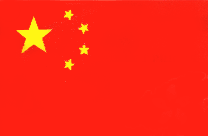
China
National Flag |
|
|
|
|
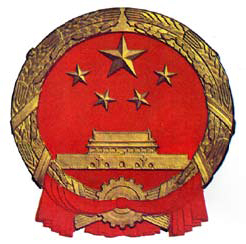
China National
Emblem |
|
|
|
|
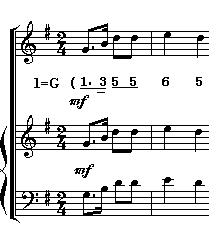
National Anthem |
|
March of the Volunteers
|
|
|
Chinese Government Useful Links |
|
|
|
|
What Foreign Media Say on the Topic? |
-
Ten Chinese
officials fired over sex scandal in former Bo Xilai
fiefdom - Developers secretly filmed men sleeping with
women then used videos to extort construction deals (link
to full story)
-
Fake photo
fallout: Chinese officials embrace social media to
explain mixup (click
for details)
-
Golf course
boom points to China corruption (click
for details)
-
Don't worry,
be happy - The government introduces the country’s new
mantra (click
for details on the Economist)
-
China: When the party is over
- By Benjamin A Shobert (click
for details)
-
China orders officials to go out
and 'make people happy' (click
for details)
-
China to mark official websites - China will mark all
government websites with an official logo as part of
crackdown against unauthorised internet sites in the
country.
-
Mystery
surrounds Chinese official who allegedly fled to Canada
with $14-million (click
for details)
-
China’s New
Sex Symbols (click
for details)
-
China's Wen
meets petitioners in show of worry over discontent (click
for details on Reuters)
-
China's future
first lady already a big star (click
for details on Yahoo! News)
-
China's
next leader? A look Xi Jinping's rise
(Click for details on the
Christian Science Monitor)
-
Next in
line (click
for details on the Economist blog)
-
Chinese
Premier: Corruption is the ‘Greatest Danger’ (click
for blog on WSJ)
-
Have a problem with China's government? President Hu
wants to hear from you.
(click
for details on Christina and Science Monitor)
- An online
fan club for China's premier (click
for details)
- China
orders officials to declare marital status (click
for details)
-
Not pointing or wagging but
beckoning - Defensive and assertive in its words, China
for the time being has a bark that is worse than its
bite
-
China official arrested over
salacious online diary
-
A word of advice to China’s
athletes: Thank your nation
-
China wages war on growing
corruption
-
China's staged leadership succession ambushed by the
YouTube video
-
China issues ethics rules for
party -Frequently broken; 'Illicit benefits' include
vacations, karaoke (link to the Gazette)
-
China's President Skips Twitter,
Opens State-tied Microblog (PC world)
-
China Launches Food Safety
Commission (link to Food Safety News)
-
Will China’s corruption crackdown
spread? (link to MSNBC)
-
Footballers bribed officials to
play for China, newspaper alleges200,000 yuan buys
international call-up, claims Shangai report, as sports
minister says corruption is deeply rooted (link to
Guardian, UK)
-
China top energy office launched
to coordinate policy (link to Reuters UK)
-
China to Move Against Local
Lobbyists (link to The New York Times)
-
China teen seen as hero for killing local official (link
to yahoo News)
-
Corruption up among China
government officials - China's anti-corruption watchdog
has said that 106,000 officials were found guilty of
corruption in 2009, an increase of 2.5% on the year
before.
-
China Finds $35 Billion in Fraud
by Officials (New York Times)
-
Policeman's binge drinking death
in China: One official banquet too far? (The Christian
Science Monitor)
-
Binge-drinking deaths shame China
(the Independent)
-
Chinese Government To Police
Social Games (The Washington Post)
-
New stars in China's firmament
(Asia Times)
-
China jails officials over dam
collapse cover-up (Washingtong Post)
-
China
official dies from alcohol
(BBC News)
-
China bureaucratic war over online
Warcraft heats up
(Reuters)
-
Chinese Agencies Struggle Over
World of Warcraft
(New York
Times)
-
China's leaders give little away - By Kent Ewing
-
China city
'to open up to media' -
Government officials in the
southern Chinese city of
Shenzhen will soon be required
to be more accountable to the
media, the city has announced.
-
China censors Namibia corruption
case that may touch president's son
-
Chinese News Sites Go Down After Reports on Gov't
Scandal
-
China
firm in Namibia bribe claim
-
Drink
of Death: China’s Cadre Culture Gone Wild
-
China’s Bureaucrats Stir
Anger by Approving BMWs
for Officials
-
China
corruption website crashes - A
Chinese website set up so people
can inform on corrupt officials
has been inundated with so many
visitors that it crashed shortly
after launching.
-
Party
or people? China official suspended for slip
-
China
warning on 'little coffers'
-
China
mayor fired for 'offences'
-
China
sacks top economic crimes official -Xinhua
-
Sacked China official in new job
-
China's Little Election That Could(n't)
-
China
cigarette order up in smoke -
A Chinese county has rescinded a
rule urging its government workers to smoke more in
order to boost tax income. (BBC)
-
China's 'black jails' uncovered
-
China
punishes 881000 officials in 5 yrs (UPI)
-
More
and More, Rural China Is Going to the Polls
-
Ex-aide to China official
sentenced to death-report (Reuters)
-
China will never adopt
Western-style democracy with a multi-party system, its
top legislator has said.
- BBC
-
China
bans lavish offices and luxury travel for its officials
- Asia
-
China's 'next leader' in hardline
rant - Telegraph, UK
-
China tells officials to listen to public complaints -
Forbes
-
China's civil service exam
cheaters go high-tech - Washington Post
-
Chinese Officials Gamble,
and Their Luck Runs Out - New York Times
-
Old problem, new theme:
China's warning on bribes - IHT
-
China sacks drunk official
outed on Internet
-
China officials 'defect in
Paris'.
-
China's top paper says
Olympics shows Party rule works. Guardian, UK
-
China's leaders brace for battle with regions.
Asia
Times
-
China's Quality Watchdog Chief Quits in Wake of Milk
Scandal. Bloomberg.com
-
China ousts officials in
disaster deaths. Boston.com
-
Nearly 200 officials
punished over China quake relief. ABC News Australia
Click Here for More Related Report
Links |
|
|
Special Reports from Official Media |
China's
civil servants exam attracts 1.3 mln applicants -
More than 1.3 million people have been accepted to sit
China's 2011 national service examination to select
government officials after online registration closed
late Sunday.
They included 327,000 applicants competing for posts in
central government and provincial-level organizations,
said a statement on the website of the State
Administration of Civil Service (SACS).
Of those, 191,000, or 58.4 percent, had at least two
years experience working in "grassroots" positions, said
the statement.
Another 794,000 were for vacancies at institutions of
county-level or below, with 57.2 percent of them new
college graduates.
Some 168,000 more applicants were awaiting for results
from recruiting bodies who would decide by 6 p.m.
Tuesday whether they were qualified to sit the exam.
The written test of the 2011 national civil service
examination is to be held on Dec. 5 in major cities
across China.
The annual nationwide test, sat by 927,000 people last
year, continues to be seen as a route to a stable job
and enviable benefits in China, where every year 6
million college graduates join the labor force.
The central government plans to recruit more than 16,000
public servants next year, 1,000 more than in 2010.
In a move to reform the civil service exam, the
government has decided to offer more vacancies to
applicants with at least two years of grassroots
experience and to reserve vacancies for college
graduates with experience as village officials, as well
as workers and farmers.
Among this year's qualified applicants, just 171 are
workers and farmers running for reserved vacancies in
customs, state taxation and railway police at
county-level or below.
In its earlier statements, the SACS did not specify the
exact number of reserved vacancies for workers and
farmers.
(2010-10-25 xinhua)
Six advantages of China's political system
(source: China Daily)
China
embraces government websites boom
More than 45,000 government websites have been set up in
China amid growing awareness of promoting information
transparency, official figures showed. Websites had
become an important platform for governments at various
levels to disclose information and interact with the
public, said Lu Shiche, chairman of China Information
Industry Association at a forum here Sunday. China
initiated the government website construction campaign
in1999. The Ministry of Defense is the latest ministry
to open its official website. In the three months after
its opening on Aug. 20,total visits hit 1.25 billion.
(Dec. 6, 2009 Xinhua)
China
posts annual government budget online for first time
China launches website to
encourage public supervision of official appointment -
Xinhua
China civil servant application
website jammed for overload. Xinhua News
News: China
adds government department for charity activities.
BEIJING,
Sept. 11, 2008 -- A new department to promote charity and
social welfare was set up on Thursday under China's Ministry
of Civil Affairs. The department would deal with welfare
lottery, charity activities, donations and welfare projects
for the elderly, disabled and children, a ministry statement
said. "We will work to boost the charity cause in China and
contribute to the country's social security system," said
Wang Zhenyao, the new department's director. The department
will draft rules on volunteers affairs and work on a
nationwide volunteer network. It is also entrusted to make a
regulation on running the welfare lottery and managing the
welfare fund raised through the lottery. It will work out
plans on how to spend the money on charity programs. (Xinhua)
Report:
China state executive posts attract
rising number of applicants. Xinhua |
|
 |
|
|
|
|
|
-
Government Related News Links:
5 railway officials in
China fired after crash. May 4, 2008
BEIJING (AP) — China's government has
fired five railway officials after last week's train crash that killed
72 people and injured hundreds of others, a state-run news agency
reported Sunday. The officials made mistakes that "directly caused the
disaster," the official Xinhua News Agency said. Investigators blamed
excessive speed for China's worst train accident in a decade, when a
high-speed passenger train jumped its tracks and slammed into another in
rural Shandong province on Monday. The five officials in the Jinan
Railway bureau were in charge of the section of track outside Zibo city
where the crash happened, Xinhua said. State media reported an order was
issued the day of the accident to reduce speed in the area because of
construction on a new rail line. The instructions were not clearly
relayed to the train's operators and other rail staff. The accident was
the worst train crash in China since 1997, when another collision killed
126 people.
China issues
landmark decree to encourage government transparency
People's Daily, April 24,2007 - The State Council, China's cabinet, on
Tuesday issued what some commentators are calling a milestone
regulation to boost official transparency by ordering government
departments to be more open in reporting information. The decree,
signed by Premier Wen Jiabao, is likely to become the country's most
specific and progressive set of rules encouraging the release of
government information, when it takes effect on May 1, 2008. (Click
for full report.)
Inspection System Targets
Corrupt Officials
China Daily July 28, 2006 - China has set up an inspection
tour system to check the performance of government officials and
state-owned enterprises' managers, an official with the Communist
Party of China's discipline sector said yesterday at a news conference
in Beijing. Gan Yisheng, secretary-general and spokesman with the
Central Commission for Discipline Inspection of the CPC, said the
commission has so far completed inspection tours of 31 provincial
governments, four state assets management corporations and nine
state-controlled banks. The provincial governments have also
respectively established their inspection tour system to check local
governments and state-owned enterprises. More than 10,000 government
officials were held liable by 11 provincial-level and 18 major city
governments in the first half of this year in a national campaign
against slack administrative law enforcement. (Click
for full report.)
Chinese govt launches English Web portal
Xinhua News, Beijing, Nov. 22 -
Gov.cn,
the official web portal of the Central People's Govern ment of the
People's Republic of China, launched today on a trial basis its English
version,
English.gov.cn. English.gov.cn
is the gateway to a wealth of Chinese government resources. Visitors can
browse under a variety of topics such as "China Today," "China and World,"
"Official Publications," "Press Briefings," "Leaders Highlights" and "Laws
and Regulations." They can also access "Services for Non-Residents" to
find out about investment in China, travel tips, children adoption and
lots more. The official website presently provides authoritative and
up-to-date information on the Chinese government, and its programs,
initiatives and services, as well as facts about China. It will
continuously increase the content of information and services in the
future. The launch of English.gov.cn serves as a catalyst for the world to
have a better understanding of China's foreign policies, its role in
international arenas and achievements in national construction, as well as
an accelerator for a greater influx of foreign investments into and
visitors to China. Gov.cn began trial run on October 1, and will be
officially launched on January 1, 2006. It now has three versions:
simplified Chinese, traditional Chinese and English.
|
|
|