|
-------------------- |
|
-------------------- |
|
|
|
China Information and Sources
Media & Publications
|
|
Related Administrative Agencies |
|
|
|
|
Comments/Reports from Outside China |
|
-
Beijing rules: don't speak
ill of Jiang (details)
-
China confirms dissident
faces media ban - CHINA has
confirmed that prominent
dissident Hu Jia is not
allowed to give media
interviews as a condition of
his release from prison, and
said he would be subject to
"supervision". (click
for details)
-
Book Review: On China by
Henry Kissinger - The
mandarin emeritus sees
China's future in its very
ancient past. Christopher
Buckley reviews By
Christopher Buckley (click
for details)
-
Power to China's press,
as long as party's in charge
(click
for details)
-
Behind the 'Great Firewall':
China's 'first blogger'
speaks out (click
for details on CNN)
-
Book Review: Dream of Ding
Village - Human nature is
shown at its worst in a tale
of greed and corruption. (click
for details)
-
What Charlie Sheen tells
us about China (click
for details)
-
Cracking down on the
foreign press in China (click
for details)
-
China blames foreign media
for police fracas (details)
-
China's Great Firewall not
secure enough, says
creator - Father of internet
censorship system says
people are using virtual
private networks to look at
banned websites (click
for details)
-
BOOK REVIEW: The lighter
side of the Tibet issue -
Waiting for the Dalai Lama:
Stories from all sides of
the Tibetan Debate (click
for details)
-
In China, 'Egypt' and
'Cairo' have vanished (click
for details)
-
Facebook users in China
doubled to 700,000 within a
month Feb. 5, 2011 (click
for details)
-
Was Chinese TV’s fighter
footage stolen from Top Gun?
(click
for details on Toronto Star)
-
'Tiger Mother' hits
Chinese bookshelves (click
for details on Los Angeles
Times)
-
Chinese journalist death
'must be investigated' (click
for details)
-
China blocks broadcast of
'farcical' Nobel prize (click
for details)
-
Liu Xiaobo: China's Nobel public affairs
disaster (click
for details on BBC)
-
China falls under the spell
of the microblog -
analysts are now predicting
there will 253 million
Chinese microblogs by 2013.
(click
for details)
-
China Daily launches Europe
issue (click
for details)
-
China’s online-video market
goes legit, Commentary: And
Apple gears up to crack
Chinese market - If there is
one sector that has lived up
to the China growth-story
hype with truly big numbers,
it is media and telecoms,
with 450 million Web users,
800 million cell-phones
users, and roughly 370
million TV households. By
Craig Stephen -- (click
for details on Market Watch)
-
Meet made-in-China Facebook,
Twitter (click
for details on Economic
Times)
-
E-book industry booms in
China (click
for details on the Economic
Times)
-
Facebook Won’t Prevail in China, Sohu’s Zhang Says (click
for details)
-
What language will you curse
in when China rules the
world? (click
for details on DNA)
-
Taiwan, China to cooperate
on digital content (click
for details)
-
Book by Chinese dissident
brands Wen Jiabao a 'fraud'
(click
for details)
-
Inside China’s ‘Chinness’
Book Of World Records (click
for details)
-
China turns a page on
independent journalism
- News media’s reputation on
the rise as newspapers,
television stations show
increasing independence (click
for details on the Globe and
Mail)
-
China jails writer for 15
years for 'endangering state
security' Human rights
organisations attack heavy
sentence on Uighur
journalist who had warned
about ethnic violence in
Xinjiang (click
for details on the Guardian,
UK)
-
Cantonese language under
the gun in China (click
for details)
-
Report: China shuts down
dozens of blogs (click
for details)
-
China's global English TV
channel hits the air (click
for details)
-
Communist Party of China's
gesture of 'openness' to the
media
(click
for details)
-
China defends censoring
web - China has said
that the 'Great Firewall'
will be maintained, even
though the web will continue
to exert a growing influence
over the country (click
for details)
-
New Chinese Internet
document redlines BS meter (click
for details)
-
Google asks US, EU to
push China on net censorship
(click
for details)
-
China to continue censoring
internet search results (click
for details)
-
China Cracks Down on Web
Savvy Activists (click
for details)
-
China urges tough internet
laws targeting 'overseas'
forces (click
for details)
-
Over 360 Chinese newspapers
to be shut down (click
for details)
-
China urges tough Internet
laws (click
for details)
-
Business book reviews: "The China
Strategy," "Effective Immediately" (click
for details)
-
Media watchdog group Reporters Without
Borders has named the leaders of China,
Russia and Rwanda as some of the world's
worst "predators of freedom". (click
for details)
-
Searching for Cracks in the Great
Firewall of China (click
for details)
-
Sky News Australia Signs
Agreement With China (click
for details)
-
China bans 18 topics from
media (click
for details)
-
'Pearl of China': Anchee
Min's version of the life of
Pearl S. Buck - A review of
Anchee Min's novel "Pearl of
China," based on the life of
Pearl S. Buck. The book is a
vehicle for the author's
retelling of her own story (click
for details)
-
China switches off the TV
and turns on the computer (click
for details)
-
US Author Says China Media
Can't Cover Google Book -
New Yorker author who wrote
book on Google says China
media restricted from
covering his visit
(click
for details)
-
Navigating China's
web of censors - Google bows out,
leaving a large, complex surveillance
system in its wake
-
Sweden
raises Internet censorship
issue with China
-
Google
finds few allies in China
battle
-
China Behind
Yesterday's YouTube, Facebook, Twitter
Outage
-
China
Keen To Enhance Media
Cooperation With Asean
-
Net Produces New
Generation of China Activists -
Internet, Twitter helping to create new
generation of human rights activists in
China
-
Chinese learn to
leap the 'Great Firewall'
-
China’s media
censorship immoral: Dalai Lama
-
Google ponders
leaving China - Failed search - Western
internet firms have found a big market
in China, but few opportunities
-
Google China
uncensors verboten tank man - Search
engine breaks law against Google will
-
Google is
'positive force' in China, says Wales -
The founder of Wikipedia, Jimmy Wales,
has publicly backed Google’s stance in
China, saying he believes the company’s
presence in the country is a “positive
force”
-
Twitter in China?
In Due Time, Twitter Founder Promises
-
China editor says
punished over bold editorial A Chinese
editor involved in authoring an
unusually bold editorial that demanded
reform says he and others have suffered
retaliation.
-
In China's
'rubber-stamp' legislature, country
comes first
-
Debate over
China's future takes flight on Internet
-Website set up in parallel with
National People's Congress hosts raucous
discussions that carry growing political
influence
-
China new web
rules condemned (link to Aljazeera)
-
Websites that are
windows in China's great firewall (link
to Telegraph, UK)
-
China's President
Hu signs up for microblogging (link to
Samaa.tv)
-
China's Long,
Strange Road Trip - In his latest
book Peter Hessler gets his driver's
license and explores the villages and
factory towns of China.
-
China's
Self-Defeating Censorship (link to the
New York Times)
-
China government's
undesired websites unveiled (link to E
Taiwan News)
-
China's .cn
Cleanup Shows Politics Behind Web Rules
(link to PC World)
-
Trekking 1,000km
in China for e-mail (link to BBC News)
-
China Internet CEO
laments state-controlled media (link to
Reuters Canada)
-
Google's Decision
to Withdraw From China - By Henrique
Schneider (link to Korea Times)
-
China censored
media 60 times in 2009, rights group
charges - Stories of vital interest to
public health and safety routinely
spiked (link to Edmonton Journal)
-
Report: China increases media controls
in 2009 (link to Washington Post)
-
Chinese Censorship
Strong Despite Google (link to PC World)
-
Text Messages in
China to Be Scanned for ‘Illegal
Content’ (link to New York Times)
-
Gmail of Foreign
Journalists in China Hijacked (link to
PC World)
-
China begins
monitoring billions of text messages as
censorship increases-China has started
scanning text messages for inappropriate
content representing the latest move in
the country’s increasing censorship.
(link to Telegraph, UK)
-
China defends
censorship after Google threat (Link to
Washington Post)
-
Q+A-What's driving
China's latest Web crackdown (Reuters)
-
China rewards
online porn surfer - A Chinese student
who says his studies suffered because of
viewing pornography on the internet has
won a contest for helping reduce sexual
content online. (BBC News)
-
Electronic Arts
looking to China, online for future
growth
Economy has forced game developers to
look beyond traditional consoles
(Vancouver Sun)
-
China:
Propaganda struggles could
intensify - State media are
trying to reshape their image
and expand their influence
(Guardian, UK)
-
China to
Create 'White List' of Approved
Web Sites (Fox news)
-
Best 10
Books On China - Planning your
first business trip to China?
Here's a guide. By Daniel P.
Harris
-
China's
Domain-Name Limits: Web
Censorship? - By Austin Ramzy
-
China Imposes New
Internet Controls - By SHARON LAFRANIERE
-
Yahoo's
Microblog Now in Chinese, but
Blocked in China (PC World)
-
China
Tightens Internet Control in the
Name of Fighting Porn, Piracy,
and Cybercrime - (CircleID)
-
It’s
Official: China Is the Biggest
News Story in the World - By
Jason Dean
-
China's
internet porn reward drives rise
in online erotica searches - The
Chinese government has offered
rewards of up to 10,000 yuan
(£888) to internet users who
report websites that feature
pornography. (Telegraph UK)
-
China
closes Yeeyan website that
translated Guardian stories -
Mostly volunteer online
community gave Chinese users
access to content from outside
country
-
Yahoo
follows Google onto China's porn
offense list
(ComputerWorld)
-
Top China
magazine editor leaves
(BBC News)
-
Obama
brother emerges from quiet life
in China to promote book -
President Obama's half brother
emerged from his usually low-key
life in the Chinese boomtown of
Shenzhen to promote his
semi-autobiographical book,
which describes their father as
abusive.
(The Christian Science Monitor)
-
Book
Review: China's Mystery Lady -
The troubled times and varied
ambitions of Madame Chiang
Kai-shek. (The Wall
Street Journal)
-
China
wants more controls on web
(The Age)
-
China
looks to export censorship (BBC)
-
A
Copyright Complaint From China -
Chinese writers are planning
group action aginst Google for
digitizing their books without
paying them.(Forbes)
-
China's
Troubled Coming-Out Party at the
Frankfurt Book Fair (TIME)
-
Westlaw
Business Launches in China and
Hong Kong (Reuters)
-
China's
guest of honour status at fair
debated by Chinese writers
(probe international)
-
Dissident
Chinese writer criticizes lack
of debate at book fair
(DW-World.de)
-
China's no
longer new to news - Frank Ching
-
China's
faltering free press (Press
Spectator)
-
Association
of Tibetan Journalists asks China to allow freedom
of press
(nvonews.com)
-
China torn
over Internet freedoms - By
Stephanie Wang
-
HK
sells a book banned in China - A book about Chinese history
banned in China has gone on sale
in Hong Kong.
(BBC)
-
China
plans own media empires
-
Dateline Peking : Fifty
years ago, The Globe and Mail
became the first Western
newspaper to open a bureau in
what was then known as Red
China. Beijing correspondent
Mark MacKinnon reflects on
what's changed since - By Mark
MacKinnon
-
China's
media: statement by the Minister
of Information - Our aim is to
present a true image of China so
the world can gain a better
understanding of Chinese
culture, says the Minister of
the Information Office.
-
China's
Online Censors Work Overtime -
To maintain "social stability"
during the 60th anniversary of
the People's Republic, China is
working hard to limit access to
the Internet
-
How the
internet is shaping China's
future - Yi Ling and Chen
Chuanlin report on the
revolution that’s encouraging a
new sense of individuality .
-
Foreign
journalists in China target of
computer attack
-
China
Clamps Down on Internet Ahead of
60th Anniversary
-
China
tries to stop publication of
Chinese History Revisited in
Hong Kong - Row over
controversial history book by
author Xiao Jiansheng that was
censored in China
-
China city
'to open up to media' -
Government officials in the
southern Chinese city of
Shenzhen will soon be required
to be more accountable to the
media, the city has announced.
-
China Web
Sites Seeking Users’ Names
-
China's
Press: Still Not Free, but More
Freewheeling
-
China
restores internet after ethnic
riots
-
China is
launching an Arabic-language TV
channel to show the Middle East
and North Africa the "real"
China.
-
Google,
Baidu China Users Blocked From
Reading News on Hu’s Son
-
China shuts access to more
social-networking sites
-
Chinese
News Sites Go Down After Reports
on Gov't Scandal
-
China
orders Australian film-makers to
drop Uighur documentary
-
Amazon: Blocked, Or Not, in China?
-
Condé Nast to launch GQ
in China - China is enjoying an
'explosion' in interest in
fashion and style, says Jonathan
Newhouse,
-
Another
Media Tour Goes Very, Very Badly
for Chinese Authorities
-
China
Learns the Yin and Yang of PR -
By Hamilton Nolan
-
China's
Web 'Dam' - Beijing backs down
over online filtering.
-
China
Backs Down From Requirement for
Web Filter
-
Is China
Trying to Prevent Another Iran?
-
China
agency to launch English TV news
-
U.S.
Presses China on Censorship -
Senior Officials Object to New
Filter-Software Requirement
-
China
slowly preparing to dominate the
globe - By Zachary Hubbard
-
Google
Censors China Porn Searches
-
Learning
the limits of 'freedom' in China
-
China Disables Some Google
Functions
-
China Intent on Requiring
Internet Censor Software
-
Google's censorship struggles continue in China
-
Twitterers
defy China's firewall
-
China
Tells PC Makers to Offer Program
to Block Sites, H-P Says
-
Publishing mergers in China
-
China's state
broadcaster under fire
-
China ex-censor
claims key Tiananmen memoirs role
-
New China News Agency: Guardian of Media Ethics - By
James T Areddy
-
Journalists get assaulted in Sichuan
-
ITN signs deal with educational publisher in China
-
US Media See a
Path to India in China's Snub (New York Times)
-
Chinese writers fail to find global voice (Reuters)
-
China launches new English-language newspaper (AP)
-
Vietnam paper banned over
China - BBC News
-
China Aims To Set Up
Large Publishing Companies Through M&As
-
China Waves Red Flag Over Web
- Foreign films and TV shows may now take longer to
be viewed online in China. (Forbes)
-
China
tightens grip, orders more
Internet control
-
Book Stokes Nationalism in
China
-
China criticised over YouTube
-
China's iron-fisted PR
-
China’s
annual Congress: seen one, seen
‘em all
(For supporting this comment,
you can also visit "funny
pictures from China": "
All
Newspapers, the Same Face".
)
-
Xinhua gets $10b to promote
China's image to the world - News.com.au
-
China's YouTube Tries To Head Off Objections -
Reuters
-
China cracks down on TV fake medical experts -
Reuters, Africa
-
At Reading in Beijing, Noted
Writer Is Stabbed - The New York Times
-
China 'escorts'
reporters to Tibet - BBC News
-
China's CCTV network
gets little sympathy after hotel fire
-
China's 'Netizens' Take on the Government - TIME
-
China Says It's Unaware
of Media Censoring Obama's Speech - VOA
-
China Censors Part of Obama Speech - New York Times
-
China Extends Porn Crackdown to Mobile Phones - PC
World
-
China makes arrests in
Internet porn campaign - Reuters
-
China plans $6.6 bil media push - Report: Beijing to
back state media expansion overseas
-
China shuts down 50 more sites during internet
crackdown - CBC
-
China TV faces
propaganda charge - BBC News
-
China closes 90
websites as internet crackdown intensifies -
Guardian
-
China now has more than
50 million bloggers as increasing numbers of people
seek an outlet for their views, state press
reported.
-
China hails increased
transparency in reporting -
Reuters
-
In China, Media Make
Small Strides -
Washington Post
-
China Said to Be
Blocking Web Sites -
New York Times
-
China's internet 'spin doctors' -
BBC News
(China is using an increasing number of paid
"internet commentators" in a sophisticated attempt
to control public opinion.)
-
'Locked up for complaining in China'
BBC News
-
China names and shames
fake drug websites.
Reuters
-
Google Unveils China's 2008 Most Popular Search
Terms. PC World
-
China
about to complete its online 'Golden Shield'
monitoring project. Taiwan News
-
China pursues
state media listing.
Financial
Times
-
China: We'll keep Red Flag
flying here - China's forcing internet cafes to
upgrade from pirated software - but is it using the
opportunity to spy on its citizens?
-
Belgian TV news crew beaten in China.
Reuters
-
China shuts
down over 300 phishing websites.
AsisOne Digital
-
Guns N' Roses' Chinese
Democracy 'banned' in China.
Telegraph
-
China abandons blanket press censorship. Telegraph
-
Foreign News Services Level Playing Field In China:
Beijing, according to a WTO ruling, will have to implement measures to open up
more to financial journalism from outlets based abroad.
-
Smoking journalists in
bad health, China warns. Reuters
-
China
restrained in poll reaction.
The Australian
-
After newspaper in
China is shut down, reporter sues regulator.
IHT
-
China extends freedoms
for foreign press. CNN
-
Wild China ? how the
BBC cut its first co-production deal with a Chinese
broadcaster. Guardian, UK
-
In China, reporters without
orders.
By Wu Zhong, China Editor Asia
Times
-
China
extends Olympic freedoms for foreign reporters.
Irish Times
-
How
free are reporters in China? BBC News
-
China bans bunny suicide
book. New Zealand Herald
-
China getting higher marks
for tackling piracy. Reuters
-
China may leave media doors
ajar. The Age, Australia
-
Criticism of China wanes during Games. Radio Netherlands
-
Olympics: How western news
teams battled against China interference. Guardian
-
China
Wins Propaganda Gold; NBC Medals in Self-Censorship. New
Yorker
-
China Squelches Speech the
Simple, Ancient Way: Ann Woolner. Bloomberg
-
Americans stopped, 300
bibles confiscated in China.
Reuters
-
Watching
the Games. LA Times
-
Uneasy relations: China
and the foreign press. AP
-
Dispatches From
Beijing. Slate.com
-
Chine vs internet - who will win?
The Age, Australia
-
China breaks Olympic
promises on rights, media, pollution. Kansascity.com
-
China’s censors block Olympic media. Daily Times,
Pakistan
-
IOC members outraged at China media 'muzzling'. ABC
News Australia
-
China plunges into
controversy with Internet backflip. AFP
-
IOC admits Internet
censorship deal with China. Guardian, UK
-
Which websites has
China blocked? BBC
-
China paper censored for
breach. BBC
-
China warns media about
"vulgar" ads over
Olympics. Guardian, UK
-
China says it will abide
by its commitments to
free reporting during
the Olympic Games.
Philstar.com
-
China confiscates 46 mn
illegal publications.
Hindustan Times
-
Internet TV Leaps Ahead
in China. Market Watch
-
Beijing Olympics: BBC to
send 437 staff to China
-
China Internet control
unacceptable - European Commissioner.
Forbes
-
China tightens media
limits loosened after
Sichuan earthquake. LA
Times
-
China
enjoys rare moment of
global support. The
Christian Science
Monitor
-
China's quake response
is unusually open. IHT
-
China won't guarantee
Web freedom over Olympics. May 8, Guardian.co.uk
More Report Links about China
Media |
|
|
 |
|
Who are blocked in China?
|
|
|
|
|
Funny
Pictures about China Media |
|
Compare and
Surprise! |
|
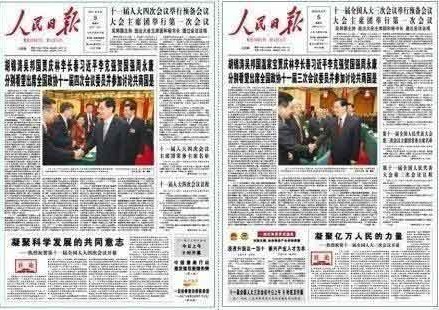
compare and
surprise
|
|
All
Newspapers, the Same Face |
|
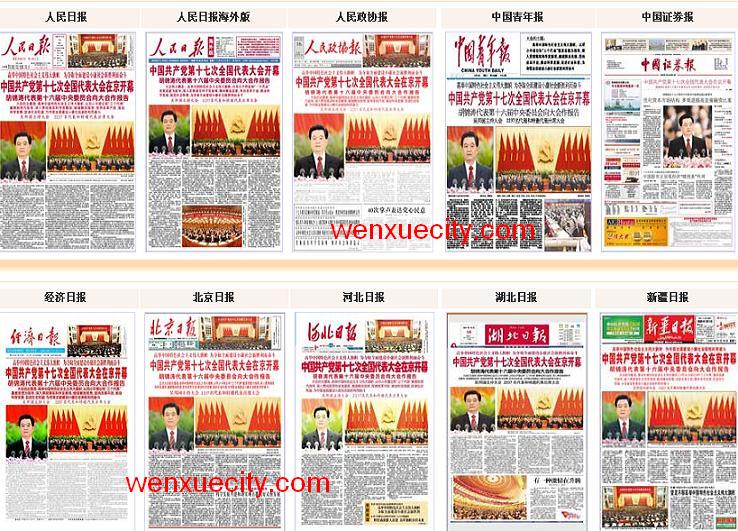
All Newspapers, the Same Face
|
|
"Chinese-Style"
TV Interview |
|
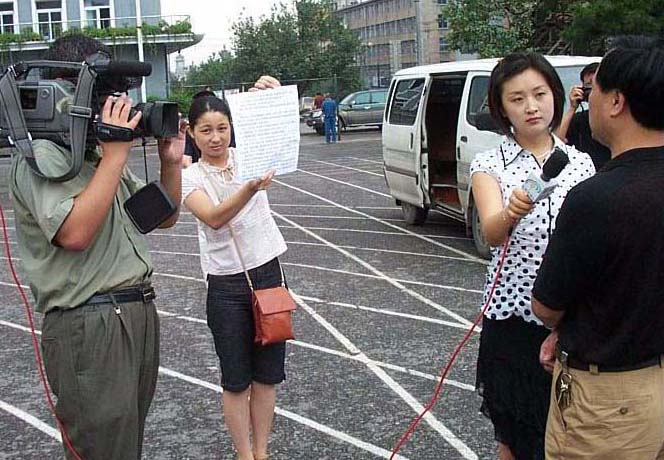
Reading while facing TV Camera and microphone
|
|
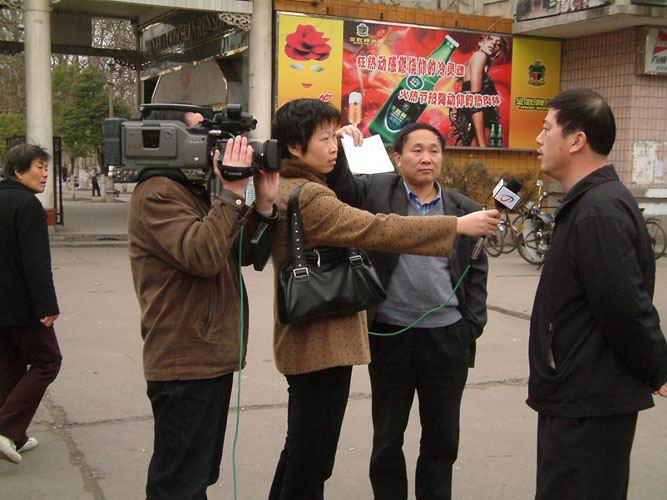
Please read this...
|
|
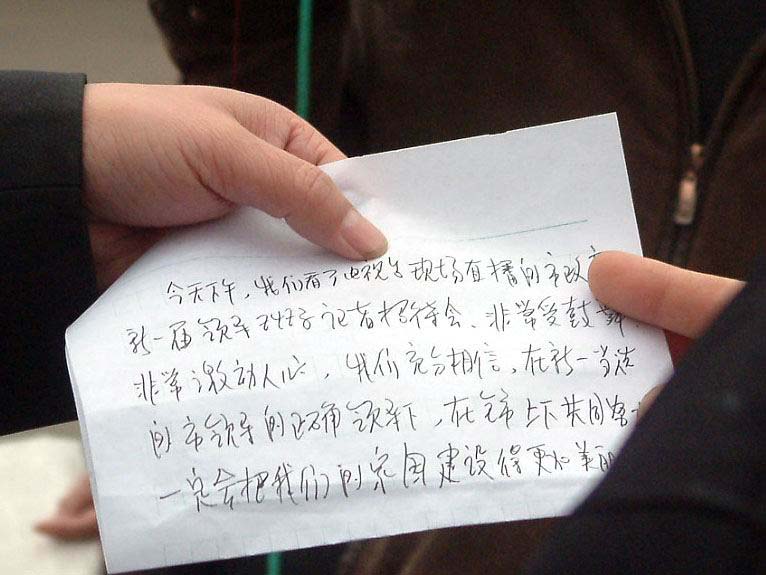
What's on this piece of
paper? ---"We
watched a TV live broadcast of the news conference
held by new municipality officials this afternoon.
We were so encouraged and excited. We fully believe
that under the correct leadership of these newly
elected officials along with the joint effort of
all residents of the town, we can make our hometown more
beautiful." |
|
|
|
Related Information |
China Official Media Xinhua's top ten domestic news
events of 2010
BEIJING, Dec. 29 , 2010 -- Xinhua top ten domestic news
events of 2010, in chronological order, are:
Shanghai World Expo
With the theme of "Better City, Better Life," the
Shanghai World Expo ran from May 1 to Oct. 31 in east
China's city of Shanghai. The Expo, the first of its
kind staged in a developing country, was another great
event in China after the 2008 Beijing Olympics. It
attracted 246 participating countries and international
organizations and a record number of 73 million
visitors.
Mainland, Taiwan sign landmark economic pact
Chinese mainland and Taiwan negotiators signed the
Economic Cooperation Framework Agreement (ECFA) in
Chongqing on June 29, a move hailed by many as a
milestone in cross-Strait relations. Agreed upon by the
mainland's Association for Relations Across the Taiwan
Straits (ARATS) and Taiwan's Straits Exchange Foundation
(SEF), the ECFA is expected to boost economic
cooperation and facilitate economic and trade exchanges
between the mainland and Taiwan.
China publishes national education plan for next decade
China published "Outline of China's National Plan for
Medium and Long-Term Education Reform and Development
(2010-2020)," or its national education plan for the
next decade, on July 29, pledging to shape a learning
society and turn China into a country rich in talent by
2020. The plan aims to promote educational fairness as a
basic policy and increase education investment in rural,
remote and ethnic minority areas.
Shenzhen special economic zone celebrates 30th
anniversary
A celebration rally was held on Sept. 6 in China's
southern coastal city Shenzhen to mark its 30th
anniversary as China's first special economic zone (SEZ).
China approved the establishment of SEZ in Shenzhen on
Aug. 26, 1980. Chinese President Hu Jintao told the
rally that the central government will always support
the SEZs embarking on "brave exploration" in their roles
as "first movers."
Earthquake, mudslide hit China's northwest regions
A 7.1-magnitude earthquake jolted Yushu in northwest
China's Qinghai Province on April 14, leaving nearly
3,000 people dead or missing. A huge mudslide swept
Zhouqu County of northwestern Gansu Province on Aug. 7,
leaving more than 1,700 people dead or missing.
CPC
sets development agenda for 2011-2015 period
The fifth plenary session of the 17th Central Committee
of the Communist Part of China (CPC), held on Oct.
15-18, approved the CPC Central Committee's Proposal for
Formulating the 12th Five-Year Program for China's
Economic and Social Development (2011-2015). The
proposal stressed efforts for maintaining a stable and
relatively fast economic growth as well as achieving
major development in economic restructuring. It also
urged raising people's incomes and deepening reform and
opening-up.
Guangzhou Asian Games, Asian Para Games
The 16th Asian Games was held on Nov. 12-27 in southern
China's Guangzhou City. Some ten thousand athletes from
45 countries and regions in Asia have competed in the
games. The host country showed its overwhelming prowess
by gaining 199 gold medals. The Asian Para Games was
held on Dec. 12-19.
Chinese supercomputer Tianhe-1A ranked world's fastest
Chinese supercomputer Tianhe-1A was ranked the world's
fastest computer by the World Top 500 Supercomputers
list, which was issued on Nov. 16 in the United States.
The Tianhe-1A system at the National Supercomputer
Center in northern China city of Tianjin, is capable of
sustaining computation at 2.57 petaflop/s, which equates
to a mind-numbing 2.57 quadrillions of calculations per
second.
China's grain output rises 2.9 pct in 2010
China's National Bureau of Statistics (NBS) announced on
Dec. 3 that the country's grain output rose 2.9 percent
year on year in 2010 to 546.41 million tonnes. This
marked the seventh consecutive year of growth for
China's grain output.
China to shift to prudent monetary policy
The Political Bureau of the Communist Party of China
(CPC) Central Committee agreed in a meeting on Dec. 3
that China would switch its monetary policy stance from
relatively loose to prudent next year to tackle rising
inflation and keep economic growth at sustainable pace.
The meeting also agreed that China would continue the
proactive fiscal policy next year.
Video:
China Forever (click
to play the video)
ChinaSMACK.com
- Websites that are windows in China's great firewall -
Whether it is about US arms sales to Taiwan or how the
film epic Confucius stacks up against Avatar, the
world's first snapshot of Chinese opinion often comes
from chinaSMACK.com. (Comment from Telegraph.co.uk)
 ChinaGeeks
- ChinaGeeks is a China blog dedicated to
translation, discussion, and commentary on modern
Chinese social and political issues. ChinaGeeks
- ChinaGeeks is a China blog dedicated to
translation, discussion, and commentary on modern
Chinese social and political issues.
|
|
|
|
|
|
|
Facts
and Figures of China Media |
Currently China has
-
2,000 Newspapers
-
9,000 Magazines
- 287
TV channels
- 700
million Mobile phone users
- 338
million Internet users
- 180
million Bloggers
Source:
Ministry of Information of PRC
Sep. 2009 |
|
|
|
|
China
Newspapers List
(in Chinese) |
|
|
|
|
|
|
Other China Related English Media |
|
|
|
|
International Media -
Asia News |
|
|
|
|
|
|
Recommended articles on this topics |
|
|
|
|
Funny
Pictures
"Chinese-Style"
TV Interview |
|
Reading while facing TV Camera and microphone
|
|
Please read this...
|
|
What's on this piece of
paper? ---"We
watched a TV live broadcast of the news conference
held by new municipality officials this afternoon.
We were so encouraged and excited. We fully believe
that under the correct leadership of these newly
elected officials along with the joint effort of
all residents of the town, we can make our hometown more
beautiful." |
|
|
|
The
China Quarterly "Published
by Cambridge University Press, The China Quarterly is the leading
scholarly journal in its field, covering all aspects of contemporary
China including Taiwan and overseas Chinese. The journal is online at
Cambridge Journals Online. Everyone has free access to the tables of
contents and abstracts. If your library subscribes, you also gain access
to the full text of articles online."
Radio
Free Asia (RFA) ("RFA is a private corporation that was established
in 1996 to provide news and information in nine language. RFA's mission
is to be a forum for a variety of opinions and voices from within Asian
nations whose people do not have full freedom of expression.")
|
| |
|
|
|
|