|
|
Home
 China Parties and Organizations
Chinese Communist Party (CPC, CCP)
China Parties and Organizations
Chinese Communist Party (CPC, CCP)
|
|
China Information and Sources
The Communist Party of China (CPC, CCP)
The
earliest Chinese Communist Party Online Information Source
|
Important Note:
This information page is the
earliest online source regarding Chinese Communist Party. It was
officially launched in October
of 1997.
All information and statistics published in this page are collected from
different official and unofficial sources. The content of this page is for your informational purpose only,
and do not necessarily reflects the views of
ChinaToday.com
or any of its
affiliates. |
New Facts and Figures of of CPS
(Source: CCP Organizational
Dept., July 1st. 2024 )
By the end of 2023, the total numbers
of CPC members are 99.185 million, an increase of 1.144
million over the same time of 2022 (up 1.2%). the total number
of root goganizatonal branches are 5.176 millions and an
increast of 111,000 (up 2.2%) .
-
Female members 30.185 million
shares 30.4 of the total
-
Minority (Ethnic groups) members
7.592 millions, shares 7.7% of the total
-
College education 55.786 millions,
shares 56.2% of the total
Memebers' age distribution:
|
Age |
Member Number |
| under 30 |
12.412
million |
| 31-35 |
11.196
million |
| 36-40 |
10.864million |
| 41-45 |
9.459
million |
| 46-50 |
9.071
million |
| 51-55 |
9.405 million |
| 56-60 |
8.907
million |
| over 61 |
27.872
million |
Member's occupations:
Occupational Distribution
|
Member Number
|
Industrial Workers and skilled workers
|
6.643 million
|
Workers in agriculture, animal
husbandry and fishing
|
26.075 million
|
Professionals in industrial, business and organizations
|
16.19 million
|
Manager positions in
industrial, business & organizations
|
11.453 million
|
Government/CPC
Employees
|
7.645 million
|
Students
|
2.771 million
|
Others
|
7.764 million
|
Retirees
|
20.644 million
|
Organizational Chart of the Chinese Communist Party Central
Leading Bodies (source: xinhua.net)

|
|
Zhongnanhai -
Headquarters of the Chinese Communist Party |
|
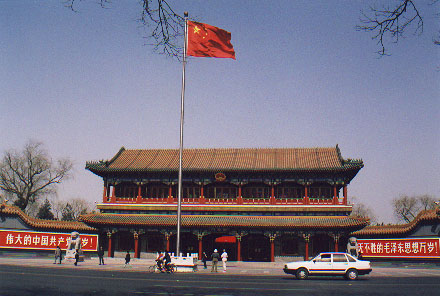
Zhongnanhai, Beijing - Headquarters
of CPC and Chinese Government
Wall Banner on the left-hand side: "Long
Live the Great Chinese Communist Party!"
Wall Banner on the right-hand
side: "Long Live the Invincible Mao Zedong
Thought!" |
|
|
Brief Introduction of the Communist Party of China
(CPC officially claimes) |
|
The Communist Party of
China (CPC) was founded on July 1, 1921 in Shanghai,
China. After 28 years of struggle, the CPC finally won
victory of "new-democratic revolution" and founded the
People's Republic of China in 1949. The CPC is the
ruling party of mainland China (P.R. China).
The Communist Party of China is founded mainly on
ideology and politics. The CPC derives its ideas and
policies from the people's concentrated will and then
turns that will into State laws and decisions which are
passed by the National People's Congress of China
through the State's legal procedures. Theoretically, CPC
does not take the place of the government in the State's
leadership system. The Party conducts its activities
within the framework of the Constitution of the People's
Republic of China and the law and has no right to
transcend the Constitution and the law. All Party
members, like all citizens in the country, are equal
before the law.
The Third Plenary Session of the 11th Central Committee
of the Communist Party of China, held in December 1978,
decided to shift the focus of the Party's work to
socialist modernization and set a policy of reform and
opening up to the outside world.
Any Chinese who has reached the age of 18, accepts the
Party's Program and Constitution and is willing to join
and work actively in one of the Party organizations,
carry out the Party's decisions and pay membership dues
regularly, may apply for membership of the CPC. Its
membership increased from 70 in 1921 to over 66 million
in 2002.
The highest leading body of the Party is the National
Congress and the Central Committee elected by it. The
National Congress of the Party is held once every five
years and convened by the Central Committee.
|
|
|
Basics of the Chinese Communist Party |
-
Date of Establishment: July
of 1921 -
Place of Establishment:
Shanghai, China -
General Secretary of the Central
Committee:
Xi Jinping (since the 18th Party's
National Congress)
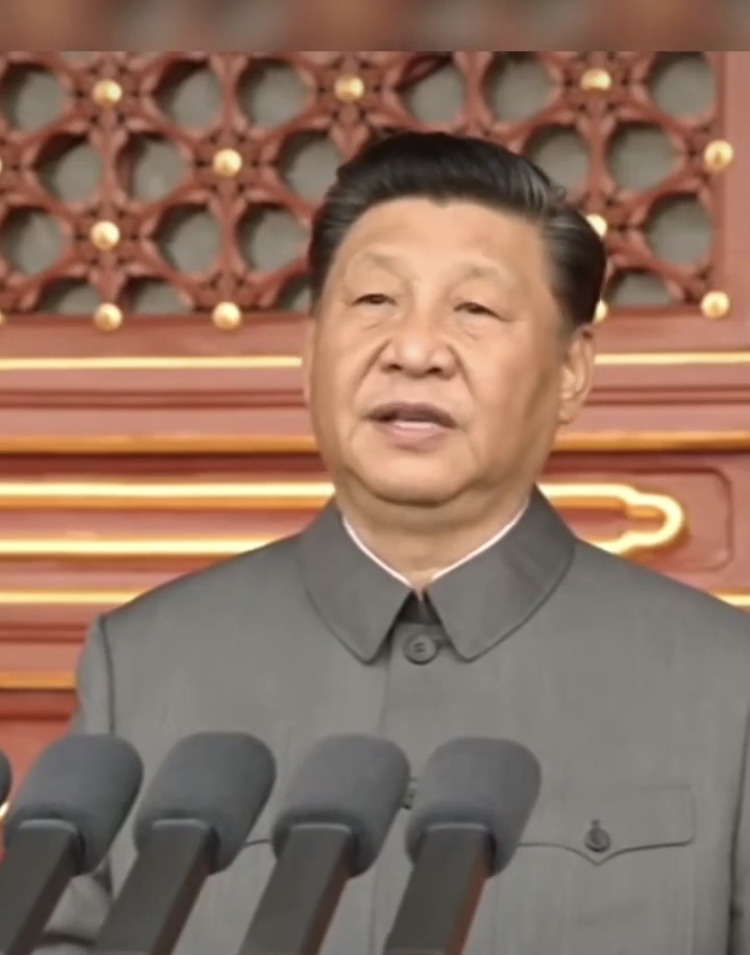
Xi Jinping
(General Secretary of CCP since 2012)
|
|
|
 |
|
Chinese Communist Party's News Release |
|
Chinese
language and other versions of news
of the Chinese Communist Party
|
|
|
Facts & Figures:
Chinese Communist Party |
- Total
Numbers of Chinese Communist Party (Updated July 2022)
|
Year |
Total
CPC Members |
Remarks |
|
2023 |
99.18 million |
(Dec.) |
|
2022 |
96.71 million |
(July) |
|
2021 |
95.15 million |
(July) |
|
2017 |
87.79 million |
|
|
2011 |
82.602 million |
(Dec.) |
|
2010 |
80.269 million |
(Dec.) |
|
2009 |
77.995 million |
(Dec.) |
|
2007 |
73.36 million |
(Oct.) |
|
2005 |
70.80 million |
(Dec.) |
|
2002 |
66.355
million |
(June) |
|
2001 |
65.749
million |
|
|
2000 |
64.517
million |
|
|
1999 |
63.221
million |
|
|
1998 |
61.877
million |
|
|
1997 |
60.417
million |
|
-------------------------------------------
|
What Are Members Composed of? (2022) |
|
Member |
Number |
% |
|
Female Members |
28.43 million |
29.4 |
|
From Ethnic groups |
72.85
million |
7.5 |
|
Above college degree |
51.46
million |
53.2 |
-------------------------------------------
|
What Are Members Age Distribution
(2022) |
|
Member |
Number |
% |
|
30 and under |
12.624 million |
|
|
31-35 |
11.535
million |
|
|
36-40 |
9.780
million |
|
|
41-45 |
8.775 million |
|
|
46-50 |
9.364 million |
|
|
51-55 |
8.776 million |
|
|
56-60 |
8.648 million |
|
|
61 and over |
27.21 miliion |
|
Source: CPC statistical bulletin
-------------------------------------------
|
What are Party Members Vocation
Distribution?
(2022) |
|
Careers |
Members |
|
Industrial Workers and skilled workers |
6.594million |
|
Workers in agriculture, animal
husbandry and fishing |
25.923
million |
|
Professionals in industrial, business and organizations |
15.487 million |
|
Management positions in industrial, business and organizations |
10.948 million |
|
Government/CPC Employees |
7.805 million |
|
Students |
3.052
million |
|
Retirees |
19.421
million |
|
Others |
7.482
million |
-------------------------------------------
Source:
CPC statistical bulletin
|
All National Congresses of the Chinese Communist
Party |
|
Session |
Date |
Venue |
Top Leaders |
|
20th |
Oct 16-22, 2022 |
Beijing |
Standing
Committee of Poli-bureau |
|
19th |
Oct 18-24, 2017 |
Beijing |
Standing
Committee of Poli-bureau |
|
18th |
Nov. 8-14,
2012 |
Beijing |
Standing
Committee of Poli-bureau |
|
17th |
Oct. 15 -21, 2007 |
Beijing |
Standing
Committee of Poli-bureau |
|
16th |
Nov. 7-15, 2002 |
Beijing |
Standing
Committee of Poli-bureau |
|
15th |
Sept.12-19, 1997 |
Beijing |
Standing
Committee of Poli-bureau |
|
14th |
Oct.12-18, 1992 |
Beijing |
Standing
Committee of Poli-bureau |
|
13th |
Oct. 25-Nov. 1,
1987 |
Beijing |
Standing
Committee of Poli-bureau |
|
12th |
Sept. 1-11,
1982 |
Beijing |
Standing
Committee of Poli-bureau |
|
11th |
Aug. 12-18, 1977 |
Beijing |
Standing
Committee of Poli-bureau |
|
10th |
Aug. 24-28,
1973 |
Beijing |
Standing
Committee of Poli-bureau |
|
9th |
Apr. 1-24, 1969 |
Beijing |
Standing
Committee of Poli-bureau |
|
8th |
Sep. 15-27, 1956 |
Beijing |
Standing
Committee of Poli-bureau |
|
7th |
Apr.23-Jun.11, 1945 |
Yanan |
Secretariat
of Central Committee |
|
6th |
Jun.18-Jul. 11, 1928 |
Moscow* |
Standing
Committee of Poli-bureau |
|
5th |
Apr. 27, 1927 |
Wuhan |
Standing
Committee of Poli-bureau |
|
4th |
Jan. 11-22, 1925 |
Shanghai |
Central Bureau of Standing Committee |
|
3rd |
Jun. 10-20,
1923 |
Guangzhou |
Central Bureau |
|
2nd |
Jul. 16-23, 1922 |
Shanghai |
Executive Committee |
|
1st |
Jul.
1-5, 1921 |
Shanghai |
Representatives |
*Capital of former Soviet Union |
|
|
|
|
|
|
|
|
|
|
|
|
|
|
|
|