|
|
|
------------------ |
|
|
|
------------------ |
|
Home
 Chinese Cities and Province Information
Yangtze River (Yangzi, Changjiang) Delta
Chinese Cities and Province Information
Yangtze River (Yangzi, Changjiang) Delta |
| |
|
China Information:
Yangtze (Yangzi, Changjiang)
River Delta |
|
|
|
The Yangtze
River Delta |
The Yangtze
River (also called Yangzi River, or Changjiang River)
is the longest river in China, with a total length of 6,300
kilometers. Originating on the Qinghai Tibet Plateau, the
river flows into the East China Sea. The Yangtze River
Delta, situated in southern
Jiangsu and northern
Zhejiang
provinces, covers 100,000 square kilometers. Fourteen cities
in the two provinces are located in the region, which has a
population of about 100 million.
Shanghai is the main terminus for
the delta. With its fertile soil, the Yangtze River Delta
produces abundant grain, cotton, hemp and tea.
The delta is dotted with 250 lakes and a network of rivers
totaling 40,000 kilometers. The Grand Canal, 1,794
kilometers long, flows from
Beijing in the north to
Hangzhou, the capital city of
Zhejiang Province, in the
south. The canal once linked northern and southern China,
and facilitated the flow of goods and materials across
imperial China. Nearby, the Taihu Lake area in southern
Jiangsu Province is known as a land of plenty because it is
richly endowed by nature with abundant water and fish
resources.
Many cities in the Yangtze River Delta have distinguishing
features. Shanghai is a center for metallurgy, machine and
ship building, textile and chemicals, and serves as China’s
leading industrial and technological base. About 80 percent
of all things made in
Shanghai are shipped to other parts of
china. Shanghai now plays a leading role in the delta’s
economic development.
Hangzhou is famous for its beautiful scenery around West
Lake, and plus other scenic spot and historical sites. It
has rapidly developed its textile and especially its silk
industries. Nearby, Suzhou is noted for its ancient Oriental
garden dating from as far as back as the Song Dynasty
(960-1279).
|
|
|
ADVERTISEMENT
 |
|
|
|
|
|
 |
|
|
|
|
|
|
|
|
|
|
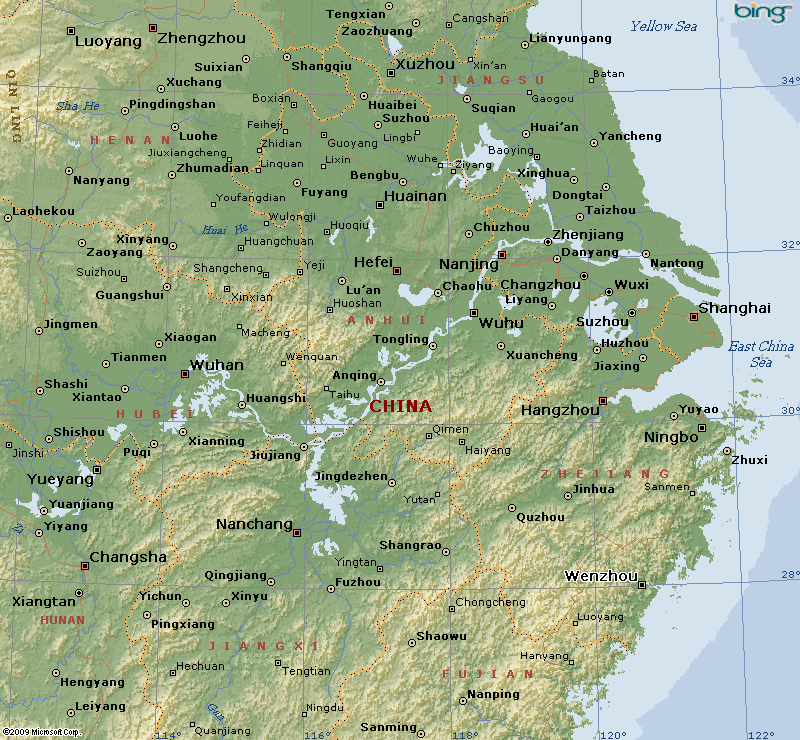
Maps of Yangtze
(Yangz, Changjiang) River Delta |
|
 |
|
|
|
|
|
|
------------------ |
|
|
|
------------------ |
|